The Great Wildebeest Migration in Tanzania
The Great Migration in Tanzania happens each year, and huge herds of wildebeest, along with zebra and gazelles, migrate across the Serengeti ecosystem in search of seasonal rainfall, fresh grazing, and water. The migration is not a one-month event. It’s a cyclical migration year-round, with herds moving through different parts of Tanzania’s Serengeti ecosystem at different times of the year. The southern plains are known for the calving season, the Western Corridor for the Grumeti River, and the Northern Serengeti for the famous Mara River crossings.
The best time to see the Serengeti Great Migration in Tanzania depends on what you’re looking to see. January to March is busy calving and predator activity season in Southern Serengeti and Ndutu. Visitors can watch large columns of animals move through Central and Western Serengeti as the herds head north. The Northern Serengeti also offers opportunities to observe the dramatic and unpredictable Mara River crossings from around July to October. In this guide, discover when and where to see the Great Migration in Tanzania, where the herds are each month, the best places in Serengeti National Park to stay and how to plan the right Tanzania migration safari.
Great Migration in Tanzania Summarised
| Question | Quick Answer |
|---|---|
| Where does the Great Migration happen in Tanzania? | Mainly across the Serengeti ecosystem |
| Does the migration in Tanzania happen all year? | Yes, but the herds change location |
| Best time for wildebeests calving in Tanzania? | Generally January-March |
| Best place for calving? | Southern Serengeti and Ndutu |
| Best time for moving herds? | Generally April-June |
| Best area in Tanzania for Grumeti crossings? | Western Serengeti |
| Best time for Mara River crossings? | Generally July-October |
| Best place for Mara River crossings? | Northern Serengeti |
| Are wildebeest river crossings of wildebeests in Tanzania guaranteed? | No |
| Can the Tanzania migration dates change? | Yes, depending largely on rainfall and grazing conditions |
GREAT WILDEBEEST MIGRATION TANZANIA
Tanzania is known for numerous attractions but one of the most exciting and thrilling adventure in the country is the great wildebeest migration, this experience permits sightseers to marvel at Over two million animals mostly wildebeest, but also zebras and gazelles ranking this a top mind blowing safari adventure in the country.
In case you may be wondering what the great migration might be, this is a yearly movement of wildebeest between Serengeti National Park in Tanzania and Maasai Mara National Reserve in Kenya.
To most that would love to engage in this adventure it’s important to understand that it’s not that an easy journey to both the animals and people, when it comes to animals they face many dangers along the way, such as predators like lions and crocodiles, as well as rivers, drought, and exhaustion.
This wildebeest runs in a circular route and this depends on the rain and this is the main reason as to why the timing and the location of the migration change a little bit each year.
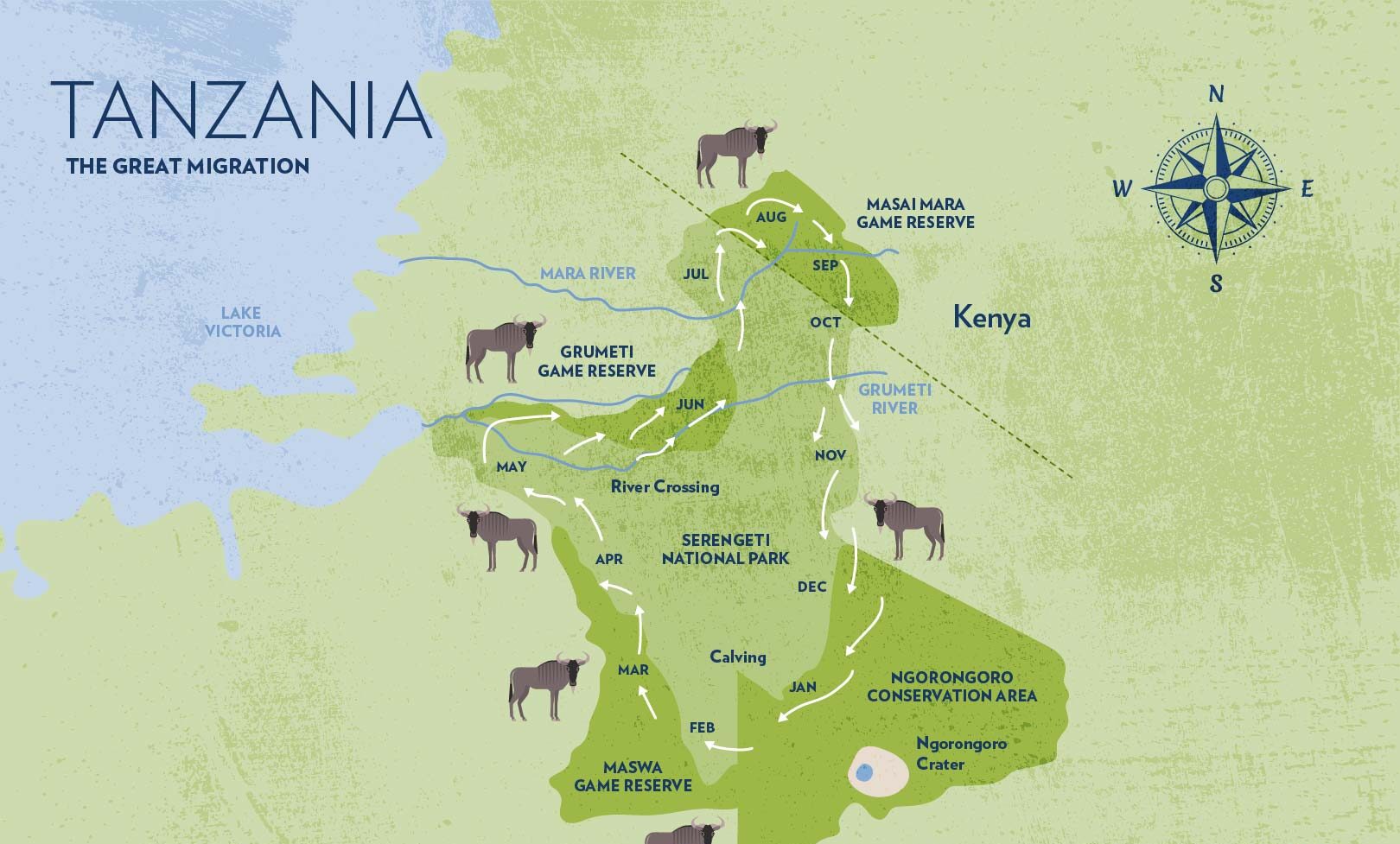
Great Migration Tanzania Map and Route
 Great Migration in Tanzania Month by Month
There are various sightseers that ask when the great migration happens and to most they try to target it and be part of it, well to all those that would love to be part of the great migration these are the times to consider.
- January-March: Southern Serengeti and Calving. While you carry out the safari in the southern Serengeti it is best to go during January to march and this is because thousands of baby wildebeest are born every day and it’s the best period to marvel at young animals and predator action, as lions and cheetahs often hunt during this time.
- April-May: Moving Through the Serengeti. During the months of april to june is when the rains stop and the herds begin moving northwest through the Serengeti and This is the time when long lines of animals can be seen moving across the plains.
- Changing herd movements
- Long rains
- Green landscapes
- Central Serengeti
- Beginning northward movement
- May-June: Central Serengeti and Western Corridor. This season focus on:
- Long columns of migrating animals
- Rutting
- Western movement
- Grumeti River
-
June-July: Grumeti River and Western Serengeti
This season focus on:
- Western Corridor
- River-crossing opportunities
- Crocodiles
- Large moving herds
- July-October: Northern Serengeti wildebeest migration in Tanzania. Embrace and be prepared to see the following on your Tanzania migration safari in these months
- Mara River
- Kogatende
- Lamai
- River-crossing opportunities
- Large herds
-
November-December: The wildebeest return to Southern Serengeti. This season has wildebeest return to Tanzania’s Serengeti plains in time for the calving season.
- Short rains
- Southward movement
- Fresh grazing
- Central and Southern Serengeti
The Summarised Great Migration Tanzania Table (Month by Month)
| Month | Typical Location in Tanzania | What to See | Best For |
|---|---|---|---|
| January | Southern Serengeti | Large herds | Migration viewing |
| February | Ndutu / Southern Plains | Calving | Predator activity |
| March | Southern / Central Serengeti | Moving herds | Wildlife |
| April | Central Serengeti | Green season | Fewer visitors |
| May | Central / Western Serengeti | Moving columns | Migration |
| June | Western Corridor | Grumeti movement | River activity |
| July | Western / Northern Serengeti | Wildebeest herds moving north | Migration |
| August | Northern Serengeti | Mara River | River crossings |
| September | Northern Serengeti | Large herds | Migration safari |
| October | Northern Serengeti | Late migration | Wildlife |
| November | Central Serengeti | Southward movement | Green season |
| December | Southern Serengeti | Returning herds | Early calving season in the Ndutu Area |
There are only basically two destinations where you can get to experience the Great Migration adventure and this is in both Tanzania and Kenya and these two countries offer amazing safari experiences and the destinations where this activity is carried out are;
Serengeti National Park; this is the main destination to go and experience this activity and the national park is located in Tanzania Serengeti national park is a huge park with different landscapes such as; grassy plains, hills, and woodlands.
Maasai Mara national park: this is also another destination to see the migration and most especially from the months of July to September. Despite the fact that the national park is smaller than the Serengeti it is also rich with wildlife.
This safari is carried out in a 4×4 vehicle with a guide and sightseers go on game drives early in the morning and late in the afternoon, and this is the time when animals are most active.
Other sightseers choose to marvel at the migration through hot air balloon rides, allowing them to view the migration in an aero view giving you an amazing experience.
As a sightseer you should not forget to carry binoculars, a good camera, light clothing, a hat, sunscreen, and insect repellent these will help you to sight the animals and also be able to take close up pictures.
In conclusion the Great Wildebeest Migration is far beyond just large numbers of animals it also involves the story of survival, nature, and life itself and getting to experience this migration is one of the mind blowing experiences any one can ever be part of.
For more information about the great wildebeest migration in Serengeti you can get in contact with our trusted tour operators. These operators can book you up for a safari and also offer you the best Tanzania safari packages. We can also organise a Tanzania migration safari however, our trips begin from 5 days.