Conservation Efforts & Eco-Tourism in Tanzania National Parks
The 22 Tanzania national parks, from the iconic Serengeti and Ngorongoro Conservation Area to remote Ruaha and Mahale Mountains, are global biodiversity hotspots. Additionally, they are home to the wildebeest Migration, the Big Five, chimpanzees, endangered rhinos, and other wildlife in Tanzania. Conservation efforts are practices established by TANAPA to protect and sustain ecosystems in Tanzania parks, as well as the local communities that coexist with these wildlife habitats.
On the other hand, eco-tourism in Tanzania relates to how safari experiences positively impact the environment of wild animals, and also the local people within or around those national parks. So, this is done through carrying fewer non-biodegradable products like polythene bags since they degrade the environment. Conservation efforts and eco-tourism in Tanzania’s National Parks work hand in hand.
So, the tourism revenue (from the Tanzania National Parks entry fees, concessions, and permits) directly funds anti-poaching, habitat restoration, community development, and climate resilience. In 2026, initiatives like WWF Tanzania’s new 150 billion TSh Country Strategic Plan (2026–2030) prioritize integrated, community-led conservation across key landscapes (Ruvuma, Soknot, Rufiji-Mafia-Kilwa, Water Towers).
TANAPA enforces sustainability codes and new tech-driven protections. Lastly, this guide covers why eco-tourism in Tanzania matters, recent improvements (e.g., drones in the Serengeti, beehive fences for human-wildlife conflict), challenges, and real eco-tourism experiences. So, this is optimized for responsible travelers seeking sustainable safaris in Tanzania.
Why Conservation Efforts and Eco-Tourism Are Vital in Tanzania National Parks
- Funding Wildlife Protection and Anti-Poaching Programs: The revenue generated from eco-tourism experiences in Tanzania partly supports wildlife conservation efforts like anti-poaching operations, wildlife monitoring programs, and ranger patrols. So, this is done through paying the rangers who protect the wild animals. Most especially protection of endangered species in Tanzania like the rhinos, in Tanzania safari parks like Serengeti against poaching practices.
- Supporting Local Communities Around National Parks: Eco-tourism revenue benefits the communities around these national parks in Tanzania. A share of tourism revenue is invested in community development projects, including schools, health centers, water infrastructure, and employment opportunities. Hence, this encourages them to protect the environment and say no to destructive measures like deforestation. Therefore, keeping the ecosystem in Tanzania and wildlife safe.
- Improving Infrastructure Within the Tanzania National Parks: Funds generated from eco-tourism also highly contribute to the infrastructure development within the national parks in Tanzania. So, roads, ranger stations, research facilities, and visitor centers are constructed to support both conservation operations and tourism activities.
- Hence, improved infrastructure makes it easier for conservation authorities to monitor wildlife while also providing better access for tourists visiting the parks in Tanzania.
- Reducing Human-Wildlife Conflict: Conservation efforts balance the wildlife and human conflict by establishing places for wild animals in Tanzania that are separate from human intervention. For instance, the Corridor of Tarangire-Manyara is only paved for the free movement of the elephant herds.
- Secondly, conservation efforts in Tanzania are positively impacted by offering knowledge to people about tourism and wildlife through different conservation programs.
Recent Improvements in Conservation Efforts in Tanzania (2026 Updates)
Tanzania has implemented several innovative conservation strategies to protect wildlife and maintain ecological balance in its national Parks.
- Technology for Wildlife Monitoring: Tanzania safari parks, like Serengeti, use modern technology such as GPS tracking devices to monitor endangered animals like rhinos and elephants. Hence, this protects animals prone to poaching. So, these sensors track animal movements and quickly respond to potential threats.
- Strengthened Security and Anti-Poaching Measures: Security at the park gates in Tanzania has been strengthened. For instance, due to illegal killings of rhinos in the past years, park authorities have employed well-trained dogs to track down poachers. Also, highly trained ranger units patrol park boundaries to curb poachers in Tanzania parks.
- Drone Surveillance in Remote Park Areas: Tanzania parks like Serengeti with boundless plains make it hard for security to be in all areas. So, aerial security managed by Rangers has been put in place. Drones allow conservation teams in parks to detect illegal activities in Tanzania and monitor wildlife movements in difficult-to-reach areas.
- Community Participation in Conservation: Communities in Tanzania Parks have also been actively involved, as they are employed as park guides, conservation assistants, or wildlife monitors. For instance, in Lake Manyara National Park, community groups protect wildlife corridors and educate others about environmental conservation.
- Wildlife Reintroduction and Breeding Programs: The Tanzanian government and TANAPA have put in place educational programs for tourists and residents in Tanzania parks. So, these programs teach them about importances of wildlife ecosystems and also how they can conserve and upgrade these natural habitats.
- Also, animals that had vanished in some parks in Tanzania have been brought back. Secondly, gazetted breeding areas for animals have been built. For example, in Mkomazi National Park, African dogs that didn’t exist are bred through the breeding process, and scientific measures are used.
Challenges Facing Conservation and Eco-Tourism in Tanzania
1. Human-Wildlife Conflict
The persistent conflict between humans and wildlife in Tanzania has made it difficult for eco-tourism and conservation efforts. For example, part of the Maasai community members who were evicted from Serengeti National Park find it hard to take part in the conservation programs for this park. So, this is because of the loss of their land.
Secondly, the other human-wildlife conflict occurs when animals like elephants leave the gazetted areas of the Tanzania parks and move to the land owned by the local community. So, this poses a threat and danger to their lives and property, restraining that relationship between humans and wild animals.
2. Limited Accessibility to Remote National Parks in Tanzania
Inaccessibility of some of the Tanzania national parks due to remoteness, like Ruaha, makes it hard for ecotourism to occur due to poor infrastructure. Since only a few tourists visit these remote parks in Tanzania within the year, low revenue is generated, which cannot fund the conservation efforts there.
3. Climate Change and Environmental Pressures
The unpredictable weather and climate in Tanzania change, which influences the different behavioral patterns of the wild animals. Also, it’s one of the difficulties for Eco-tourism and conservation, for example, during the dry season, most of the water sources dry up.
So, this could lead to the death of animals in some parks due to less reliable water sources. Hence, causing drought and famine, which highly affects herbivores, since savannas dry in prolonged dry seasons.
4. Tourist Congestion in Popular Tanzania National Parks
Tourist congestion in popular national parks in Tanzania, like the Ngorongoro, leads to environmental degradation. So, this is because of noise pollution generated from vehicle engines. Also, soil exhaustion due to pressure brought by many Safari vehicles using the same pathways. So, without proper regulation, excessive tourism in those popular parks can lead to environmental pressure and habitat degradation over time.
Solutions Implemented to Address Conservation Challenges in Tanzania National Parks in 2026
1. Wildlife-Friendly Fencing Systems
To combat the threat of animals from wildlife centres attacking people in nearby communities, park authorities in Tanzania have built fenced enclosures. So, this is to keep wild animals from attacking the property of the local villagers. For example, for the communities around the Katavi national park, fences made of bee-hives have been put in place to stop animals from attacking the villages. So, this has lessened the human-wildlife conflict.
Also, these beehive fences have been applied to the communities near the Serengeti National Park. Additionally, these protective fences have been constructed around the Bomas to protect their cattle from being fisted on by predators like the lions.
2. Sustainable Water Management
Since climate and weather patterns in Tanzania parks are very unpredictable, Water conservation initiatives involving farmers have been established. This program ensures that water is well used by the farmers in the upstream areas of the Rufiji basin so that Ruaha National Park has reliable water sources even during prolonged dry seasons.
Eco-Tourism Experiences in Tanzania Safari Parks
We are going to look at some of the safari experiences in the different Tanzania national parks, focused on building the relationship of a traveler with nature. But at the same time, the funds that are obtained from the revenue act as compensation for the different conservation efforts in Tanzania required
1. Walking safaris in Tanzania
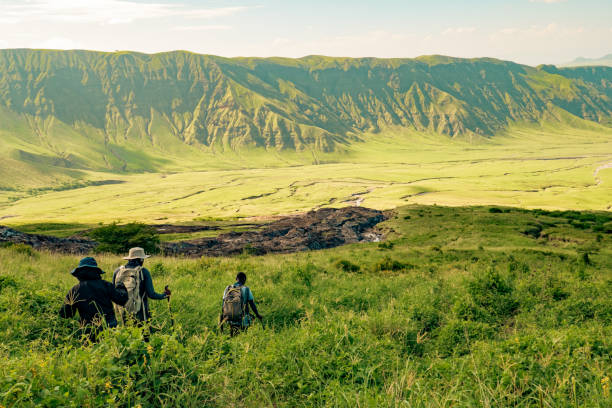
In the Ngorongoro conservation area, when descending the crater, tourists hike or engage in walking safaris. So, this limits air pollution, which could have been caused by the fumes of the safari vehicles. Hence, this eco-tourism experience contributes to environmental regeneration.
2. Chimpanzee Trekking in Tanzania
Additionally, walking safaris in Tanzania also apply to visitors of Mahale National Park, whereby they hike on foot to meet the group of chimpanzees. Rather than using vehicles that could lead to the destruction of Mother Nature.
3. Cultural Tourism Experiences in Tanzania Parks
Tourists visit the local communities in parks like the Serengeti. So, they are usually led by a tour guide on foot. So, this cultural tour experience in Tanzania bridges the gap in connection between the tourists and residents in Tanzania. Also, it expands the knowledge of the travelers that they have about this ecosystem and how it coexists with the local community.
Eco-Lodges Promoting Sustainable Tourism in Tanzania
These eco lodges in Tanzania are under the management/authority of the people dedicated to conservation. Or some are community-owned around the national parks in Tanzania. Eco logdes in Tanzania prioritize improving the environment by the use of biodegradable products.

Ecoscience Science Center and Luxury Lodge in Tanzania
- For instance, the Lake Manyara tree lodge is made out of thatched grass and timber. So, this creates less impact on the soil and puts less pressure on the land.
- The highlands lodge is built using a traditional architectural inspiration of the Maasai Bomas, with canvas that can be recycled. Hence, it cannot destroy the environment.
- The Gibb’s farm in Karatu near Ngorongoro elevates the lives of the people staying around by offering them jobs as staff, chefs, and even guides.
Therefore, these Tanzania eco-lodges not only focus on environmental sustainability, but also on elevating people’s standards of living. Also, this is done by the Tarangire treetops, which offers health benefits and educational opportunities to the children of the rural communities.